


What It's Actually Like to Volunteer as a Digital Mentor in Indonesia
Students in Indonesia are surrounded by a booming digital economy, yet most have never met the professionals actually running it. By volunteering just one day to share your real work in Design, Coding, AI, or Growth Marketing, you can bridge this gap and show high schoolers that a digital career is entirely within their reach.
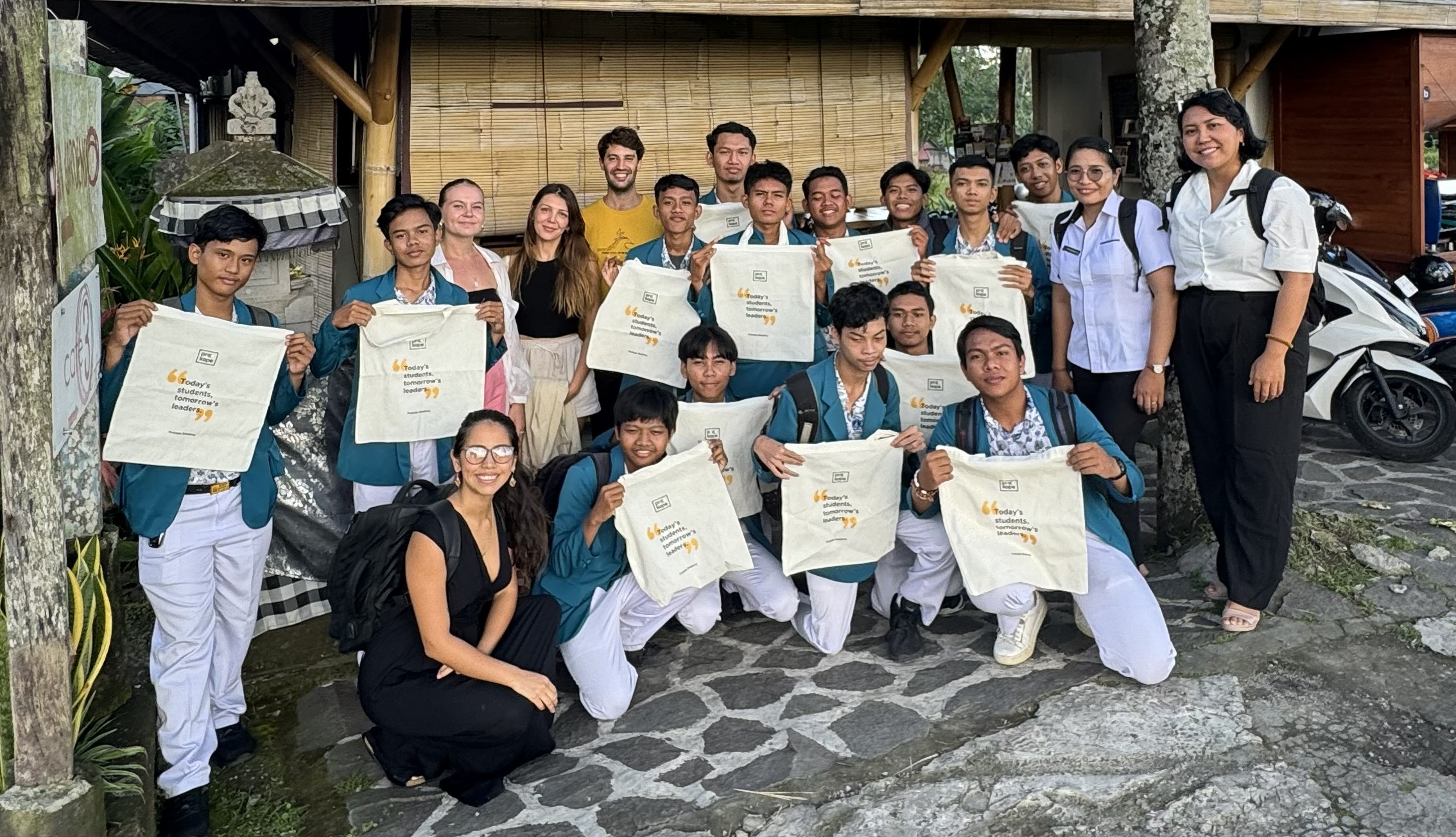
Imagine you're standing at the front of a classroom of thirty teenagers. Laptop open. You've pulled up something from your actual work, like a brand deck, a campaign, or a piece of code, you've asked the room what they think you do for a living.
The guesses are always the same. Teacher. Photographer. Maybe some kind of computer person, not designer, not growth strategist, nor an AI consultant.
Not because those aren't real jobs, but because no one in that room has ever met someone who has one.
That's the problem Prokope Akademy exists to close. And it's why we need people who already have the skills.
❓ What These Students Are Actually Up Against
Indonesia has 200+ million internet users. Jakarta is one of the largest business hubs in Southeast Asia, and Bali hosts hundreds of remote foreign companies, creative agencies, and international founders running everything through a screen. Design, Coding, AI, and Growth Marketing aren't niche specializations here, they're how the economy works, and they're embedded deeper every year.
The students we teach are growing up inside all of that, but the inner workings of this digital economy are often invisible to them.
The vocational tracks at SMA and SMK high schools provide a crucial foundation in math, basic computing, and administrative theory. Many schools are also proactively adding coding electives and digital design modules to their curriculums. However, the tech industry moves faster than any standard school curriculum can adapt. Our goal is to build on the hard work these schools are already doing. We step in to connect curious students directly with active professionals, giving them a real-world look at career paths they might not have discovered otherwise.
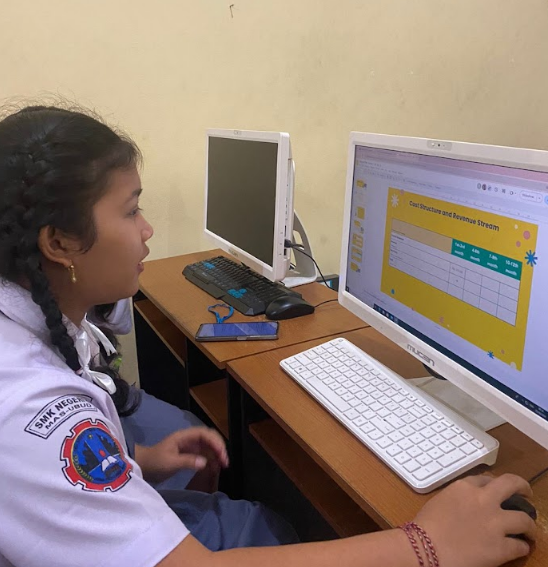
A student can graduate with a full vocational certificate and still have no real sense of what a UX designer actually produces, what a growth marketer is optimizing for, or what it means to build something with AI rather than just use it. Not because the internet doesn't exist, but because without someone to put the work in the context, the internet looks like noise. YouTube looks like entertainment, not training. Instagram looks like social life, not a content strategy someone is being paid to run.
What's missing isn't access. It's proximity to someone who actually does this work.
The result is concrete: the difference between a student who applies for a design internship and one who doesn't know that's a job someone like them could have.
⚡ The Four Skills We Focus On
Prokope Akademy focuses on four areas, because these are where the distance between what students know and what the economy pays for is the widest, and where a single morning with the right person can shift what a student believes is possible.
Design. Brand identity, UI/UX, visual communication. If you can open a client brief and walk a group through how you respond to it, the questions you ask, the decisions you make, why you chose that typeface over another, you've already given them something no school period ever has. Students who've grown up consuming digital content often have strong visual instincts. What they're missing is the professional vocabulary and a clear sense of how a real workflow actually runs.
Coding. Frontend, backend, app development, automation. Even a high-level conversation about how software actually gets built opens doors. The students who've never considered a career in tech aren't thinking they're not smart enough, they're thinking it's for someone else, from somewhere else. A volunteer who shows them the actual process can dismantle that assumption faster than any career's poster.
AI. How to use it in real work. When it helps and when it creates more problems than it solves. What shifts when an AI tool enters a professional workflow, and what stays the same. Andrea Cayuela ran a session at SMAN 1 Ubud on exactly this topic earlier this year, and the students engaged in a way that surprised the teachers at the back of the room.
Growth and Marketing. SEO, paid ads, content strategy, social media, promotion strategies. This is the skill students think they already understand, because they use social media. Rena Sanilia, lead of business growth at Choys, spent a morning at the same school walking them through how she turns a passion into an actual product. Several students had been posting content for months without realising there was a professional structure behind what they were already trying to do.
🗓️ What a Morning With Us Looks Like
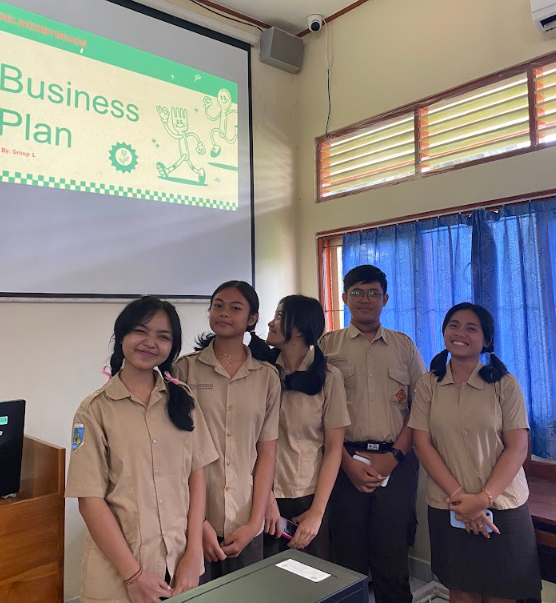
We don't give volunteers a script, no curriculum, no slide template.
What we ask instead is to show up with something real, a project you did, a decision you'd revisit with hindsight, a workflow your team actually uses. Sessions run roughly three hours across two classroom periods, and the structure is simple: open with something from your actual practice, walk the room through how you think, then take questions.
The questions are usually better than expected.
Because students at SMA and SMK schools aren't passive. Once they realize they're talking to someone who actually does the thing rather than someone reciting theory about it. They ask follow-ups. They push back on the bits that don't make sense. Once they realise they're talking to someone who actually does the work, the room shifts. They stop waiting to be taught and start trying to understand.
You don't need to know Bahasa Indonesia beyond basic courtesy. Students at the schools we partner with speak enough English to follow a workshop, and our team handles scheduling, school coordination, and any translation support on the day. The students you spend a morning with have somewhere to go next, Prokope connects standout participants with many companies for internship opportunities, where they take on real briefs for real clients.
🗺️ Why the Geography Is Part of the Point
Ubud, Canggu, and south Jakarta are among the highest concentrations of remote digital professionals in Southeast Asia. Designers, developers, growth leads, AI consultants, and founders are already here. Working from co-working spaces in Batu Bolong, long-stay villas off Monkey Forest Road, and the same cafés that students walk past on the way to school.
Most of them, at some point, want to give something back. They're just not sure what that looks like, or who to call.
SMAN 1 Ubud is tens of kilometres away from Canggu, a manageable drive on a Saturday morning. SMK 1 Ubud is minutes from the centre of town. Jakarta adds startup density and agency experience that we don't have in Bali. West Java — including the Bandung area — adds its own growing creative and tech scene. For professionals based anywhere on Java, we coordinate remote sessions when in-person isn't possible.
The gap between the talent in those cities and what reaches the schools isn't technical. It's relational. The bridge is a laptop, a morning, and someone willing to show up.
🔁 Who We're Actually Looking For
We'll be direct about this.
Prokope Akademy is not the right fit for professionals who want to deliver a motivational talk, share some life wisdom, and leave. Students at SMA and SMK schools are sharp. They know when they're being given filler. The sessions that stay with them are the ones where a volunteer arrived with something concrete, like a design they made, a campaign they ran, or a product they actually made, and walked the room through how they think, not just what they achieved.
You don't need a teaching background. You don't need to prepare slides. All you need is something real to show, and patience for the part where a student asks the same question five different times.
The volunteers who come back tend to share a few things: they pass through regularly, they work in Design, Coding, Growth, or AI, and they have a low tolerance for sessions where nobody leaves knowing anything new.
The students in those classrooms are exactly where you were before someone showed you how this works.
💬 What You Actually Get Out of It
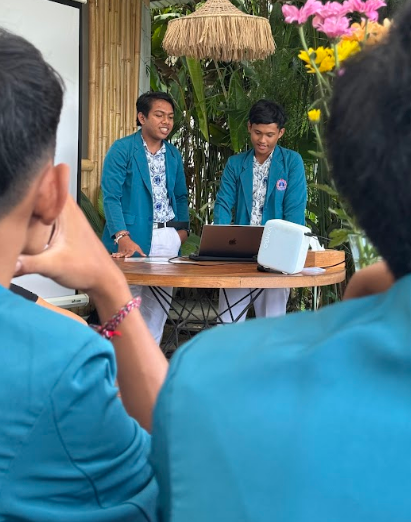
We won't dress this up as entirely selfless. Or state that we influence them more than the schools did
The volunteers who keep returning describe something they didn't expect: having to explain what you do, in plain terms that really explain it, from first principles, to someone with no professional context, clarifies your own thinking in ways most professional development doesn't reach.
Some come to sharpen how they talk about their work. Some come for the human contact that remote life quietly erodes. Most mention that being in a room with students who are genuinely excited by the thing you've spent years building expertise in is a useful reset, a reminder of why the work matters, and it makes them happy just thinking about it.
One of our most consistent mentors, Ayu Réni — founder of Bali Anecdotes — has returned to run storytelling and brand sessions at Ubud high schools multiple times. For the people who fit, it's rarely a one-time thing.
The next time someone in that classroom guesses "teacher" or "photographer", it could be you correcting them — and showing them what the work actually looks like.
If that room sounds like somewhere you'd want to spend a Saturday morning, we'd like to hear from you. Apply to volunteer here.
%20(1).png)

.jpeg)


